




Podcast: Why TMCs must embrace agentic AI now


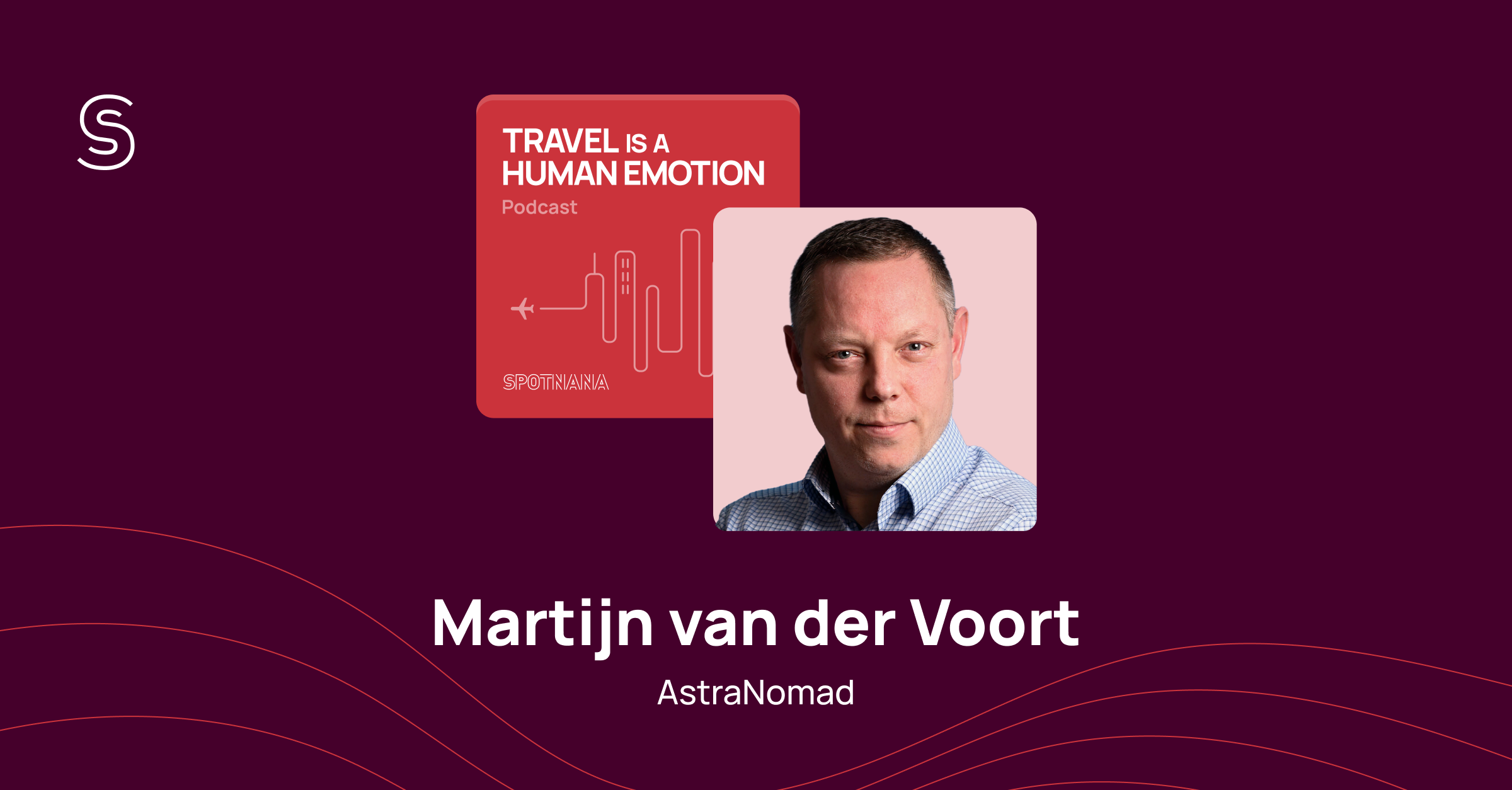
Martijn van der Voort is an independent travel industry advisor and founder of consultancy AstraNomad. He spent over 15 years at CWT implementing technology and has a deep understanding of travel technology and how travel management companies (TMCs) operate.
For the 22nd episode of The Travel Is a Human Emotion Podcast, SVP of Marketing at Spotnana Justin Schuster spoke with van der Voort about the structural constraints holding TMCs back, what agentic AI actually requires to function, and why transparency is the clearest path to rebuilding trust with buyers.
Legacy architecture and incremental change
TMCs, van der Voort argues, have structural constraints that make change difficult.
“The issue seems more that they’re still carrying an architecture that was built for another age than the one we’re now in,” he said. Legacy infrastructure constrains what TMCs can build today and limits the conversations they can credibly have about the future.
Van der Voort draws a direct line between that technological architecture and the experience travelers are asked to accept. “I don’t want to look at some outdated platform where I still need to use dropdowns and type in my departure and arrival airport, then manually add a hotel on top of it,” he said.
The gap between what travelers expect in their personal lives and what corporate travel delivers is widening. Incremental improvement won’t close it.
For buyers, the architecture a TMC is building on determines what’s actually achievable on their innovation roadmap. Much of what gets presented as innovation is constrained by systems that were never designed for the environment we’re now operating in.
What agentic AI actually requires
Full agentic capability, meaning a system that can act autonomously on behalf of a traveler, requires something most current AI deployments are missing: deterministic governance.
“You cannot let agentic systems run without deterministic governance,” van der Voort said. “It’s not just about a better interface.”
He describes three layers any serious agentic system must have. Governance defines what the system is allowed to do. Execution covers whether it can complete the task: book a flight, make a transaction. Audit provides traceability: who initiated the action, was it the agent or the user, and what happened if something went wrong.
“Without those layers, you have assistive AI. You don’t have true agentic capability at all,” van der Voort said.
Outside of agentic AI, Van der Voort sees near term opportunity in the use of AI to streamline TMC operations. “A lot of what used to happen in very heavy mid-office workflows, PNRs rolling through and all of that, AI is already massively improving the speed and reducing the friction there,” he said.
On whether large language model providers will become travel booking agents, van der Voort is measured. Travel may not be a priority for them, and the complexity of the domain, built up over decades of edge cases and operational requirements, is not something absorbed quickly.
His view is that serious agentic players will need to own their own models rather than building on large third-party infrastructure. The players most likely to disrupt the space may not be visible to most of the industry today: fintech companies, agentic commerce platforms, and technology providers that see travel as one node in a much larger network.
Transparency as a competitive differentiator
The erosion of trust between buyers and TMCs traces, in van der Voort’s framing, to a lack of transparency about how systems actually operate and what they actually cost.
“Buyers are already asking sharper questions around cost, content, data, and decision making,” he said. “That’s a healthy thing.”
Van der Voort points to data fragmentation as a concrete example of how trust erodes in practice. “Over the years, TMCs have acquired other TMCs, data gets fragmented, and when you ask for a report, that’s just one example of many issues that result,” he said.
The pattern extends to innovation claims. TMCs have long described themselves as innovative, but van der Voort argues the outcomes haven’t matched the narrative. “Trust will improve at the moment that buyers can clearly see how the system actually operates,” he said.
TMCs willing to be clear about what they can do, what they cannot do, and what clients are actually paying for have an opportunity to build long-term relationships that the current model has made difficult to sustain.
That posture extends to how buyers run RFPs. Van der Voort’s advice is pointed: an RFP should reveal the strongest operating model, not reward the best narrative.
Travel as human connection
Van der Voort’s answer to the connection between travel and emotion further explored the tension at the center of the conversation. Travel is managed by systems, but experienced by people.
“Technology should truly help us as human beings,” he said. “Technology should remove friction, not add to it. And once that starts working well, technology fades into the background and allows the traveler to truly focus on the actual purpose of the trip. The purpose of the trip is not going from A to B. The purpose of the trip is to meet and visit someone.”
Written by

-
 Hotel mapping is the hidden tax on travelTravel has a foundational problem with hotel data that the industry acknowledges but rarely discusses with full transparency. The problem is the truth. Specifically, whether a booking system can reliably answer three basic questions...

-
 Podcast: Goodwings CEO on easy, sustainable business travelSustainability is a defining challenge for corporate travel programs, but for many companies the gap between intention and action remains wide. Goodwings, a Copenhagen-based travel management company, has built its entire platform around closing...