



Podcast: ZS Associates’ multi-channel travel program


Most corporate travel programs force travelers to book through an online booking tool (OBT). ZS Associates takes a different approach.
The professional services firm, which operates more than 35 offices worldwide and runs an $80 million travel program, lets travelers choose to book travel directly through the website of major airlines as well as through Avenir (powered by Spotnana) with servicing provided by Direct Travel.
For the 24th episode of The Travel Is a Human Emotion Podcast, Justin Schuster, SVP of Marketing at Spotnana, spoke with Suzanne Boyan, Global Meetings and Travel Manager at ZS Associates, and Sarah Hayden, Global Travel Lead at ZS Associates, about how their multi-channel program came together, how they keep the data connected across channels, and where they see artificial intelligence (AI) taking corporate travel next.
Integrating direct bookings into the travel program
ZS first enabled direct booking with United and has since expanded to American Airlines, Delta Air Lines, and Southwest Airlines. When a ZS traveler logs into a frequent flyer account on an airline’s website or app, the company’s negotiated corporate rate appears. Today over half of travel bookings are made directly with the carrier.
“Whether you go the traditional route with a TMC or you want to go the direct route on an app with a given supplier, we still get access to our corporate rates, we still capture the data on the back end for reporting, and you’re still covered for duty of care,” Hayden said. “It’s more of a choose-your-own-adventure kind of program.”
Stakeholder feedback
The program design grew out of feedback from travelers and stakeholders alike.
The initial push came from the top. ZS’s CFO, doing his own comparison shopping, told Boyan he could find flights cheaper than their managed channel offered.
“In a panic, I said, no problem, we will absolutely get you that through our TMC,” Boyan recalled. “And he said, no, that is a waste of time. What I want you to do is figure out a way for me to just book it direct.”
Rather than having to pitch leadership on a new model, Boyan already had the buy-in and the mandate to try something new. The first solution, adopted in 2017, used Traxo to capture direct bookings from confirmation emails. Traverse later expanded the program’s functionality, and direct booking capability grew from a single airline into four.
Light policy, smart travelers
ZS keeps its travel and expense policy simple. Travelers book lowest logical economy airfare, standard king or queen hotel rooms, and standard size cars.
Inside the company’s instance of Avenir, basic economy is blocked from being booked. Within direct channels, restricted fare types like basic economy can still appear, but travelers learn to change their booking behavior.
“You make the mistake one time of booking basic economy, and you don’t make that mistake again,” Hayden said. Hayden noted that suppliers have not yet built strong policy guardrails into the direct booking experience, and she expects that to develop as more companies adopt the model. For now, ZS leans on its culture.
The firm hires people it trusts to make sound financial decisions for the business and for clients, and that judgment carries over to travel. Keep the principles clear and the policy straightforward, and travelers tend to make good choices without rigid enforcement mechanisms.
Building the data picture in-house
A multi-channel program creates a multi-source data challenge. ZS pulls direct booking data from Traverse, captures additional direct activity through Traxo’s email parsing, and collects agency and Spotnana bookings directly.
To integrate these data sources, ZS is building its own data solution. Hayden’s team is developing an in-house dashboard in Power BI that pulls every data connection into a single data lake for program and spend analytics. Senior leadership will get visibility into trends, and the view will fold in environmental, social, and governance (ESG) metrics as well as internal meeting spend. Expense and payment data from SAP and Emburse will round out the full picture of business travel cost.
“It’s something that just doesn’t exist in the industry, so in true ZS fashion, why not just build it ourselves?” Hayden said. “When there’s a problem, and no one else is gonna fix it, ask a ZSer. We’ll fix it for you.”
Multi-channel booking trends
With multiple booking channels available to travelers, clear patterns show up in the data. Travelers on international and multi-stop itineraries tend to choose the managed route. Travelers on simple, repeated domestic routes are more likely to book directly on a supplier app.
A generational split emerges too. Younger travelers who manage much of their lives on their phones are comfortable booking and changing trips the same way, matching the expectations of the next generation of business travelers. More tenured travelers often rely on an executive assistant to handle booking so they can stay focused on client work.
Book and get serviced anywhere
Boyan and Hayden are proponents of omni-channel servicing, where a traveler can book in one place, change a trip in another, and have every party stay in sync.
“It should not matter where I book,” Boyan said. “What matters is who can help me when I need the help.” During a large system-wide disruption, or irregular operations (IROPS), a travel agency has the staff to rebook affected travelers when airline teams are stretched thin. If a traveler books direct and something goes wrong, Boyan wants that traveler to still be able to turn to their agency, see the trip, and get home.
Getting there takes cooperation. Airlines have to enable servicing across channels, and the technology providers have to keep records aligned. Avenir already delivers this with one carrier in the ZS program, and Boyan and Hayden want it extended across all of them.
The AI question
Both leaders see AI moving from buzzword to functional tool. Hayden compared the moment to the long buildup around New Distribution Capability (NDC): some industry trends fade, and some finally deliver. She puts AI firmly in the second group, and sees a real test ahead for travel agencies and TMCs.
“If [travel agencies and TMCs] don’t embrace AI and what’s coming in that space, they might get left behind, and I don’t want that for anyone,” Hayden said.
Boyan is focused on what AI can do for travelers, not just for travel managers. Travelers who once started a search on Google Flights now begin with tools like ChatGPT or Copilot. She imagines an AI agent that follows up after a trip and asks how the hotel was, building a base of real, recent reviews from colleagues rather than strangers online.
It could be possible to replace the static post-trip survey with a conversational exchange that yields better insight. For travel platforms, that future depends on open, modern architecture that AI agents can plug into on a traveler’s behalf.
Keeping the human at the center
For all the talk of channels, data lakes, and AI agents, both leaders returned to the traveler.
“We can’t lose sight of them, and we can’t bury them under all of these technicalities,” Hayden said. “Use the technology to enhance the human experience. I think that’s what’s most important.”
Boyan framed it through the moments that matter most, when a trip goes wrong and a traveler needs to get home. “Our people are the reason we’re here,” she said. For ZS, taking care of them means reducing friction and giving travelers the tools and options to thrive.
Written by

-
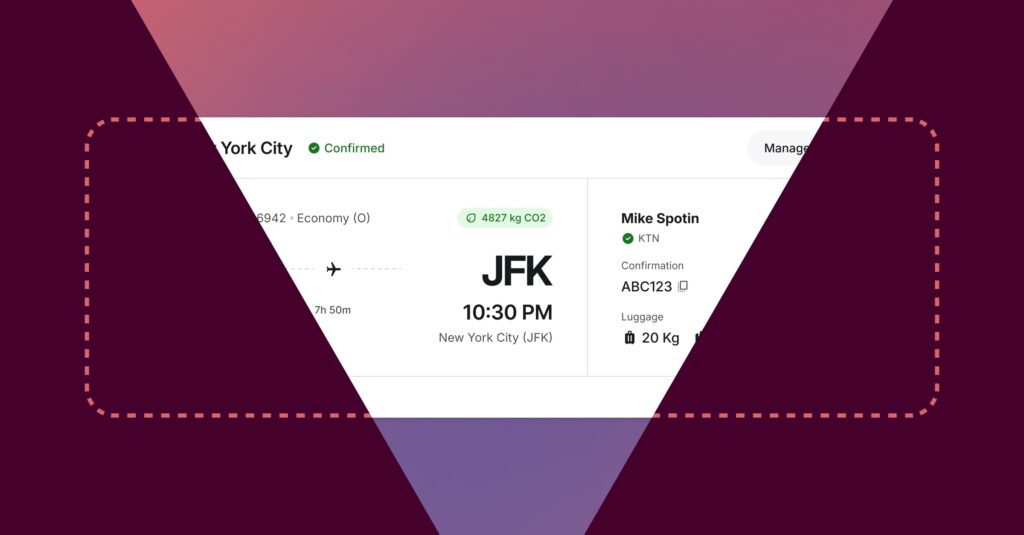 Stealth travel limits visibility to those who need to knowCorporate travel can be highly sensitive. Perhaps a CEO needs to meet with a board candidate, or a mergers and acquisitions team needs to negotiate a deal in person without spreading rumors. If travel...

-
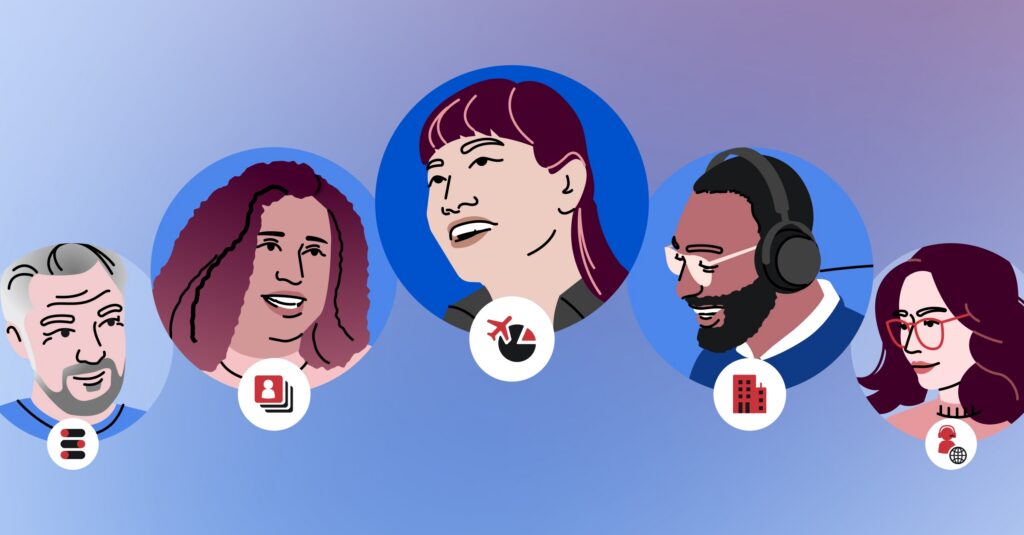 Role-based access control supports tailored permissions for each userIt takes a village to run a travel program. Within a corporation there can be one or more travel managers, key stakeholders across finance and HR teams, and a wide range of specialized users...