



What is Offers and Orders in travel?


If you’ve ever wondered why buying airline travel feels nothing like ordering from Amazon, you’re not alone. The airline industry operates with technology developed before the relational database, and it shows.
Today, when you book a flight, airlines generate separate records for your ticket, your reservation, and each ancillary service you purchase. This fragmentation creates complexity for everyone – travelers who want to change a trip, agents who need to service a booking, and travel sellers like travel management companies (TMCs) and online travel agencies (OTAs) that need to reconcile financial transactions.
Enter Offers and Orders, the transformation that is changing how airlines package and sell their products. Spotnana’s Travel-as-a-Service platform has been built from the ground up to support Offers and Orders, enabling our partners to transition their customers seamlessly into the future of airline retailing.
Let’s break down what Offers and Orders is, why it matters, and how it will reshape travel for everyone.
Understanding offers: your personalized shopping experience
When you eat at a restaurant, the menu lists the items you can purchase. You can think of the menu as a list of offers that the restaurant is willing to sell to you at that moment in time. Typically, the menu is static, and the offers are the same for everyone.
For many decades, airlines have been limited to a set “menu” at any point in time of 26 top level fare codes – one for each letter of the alphabet. This constraint was necessary when the first generation of retailing systems was developed, because computers and data networks were much more limited than they are today.
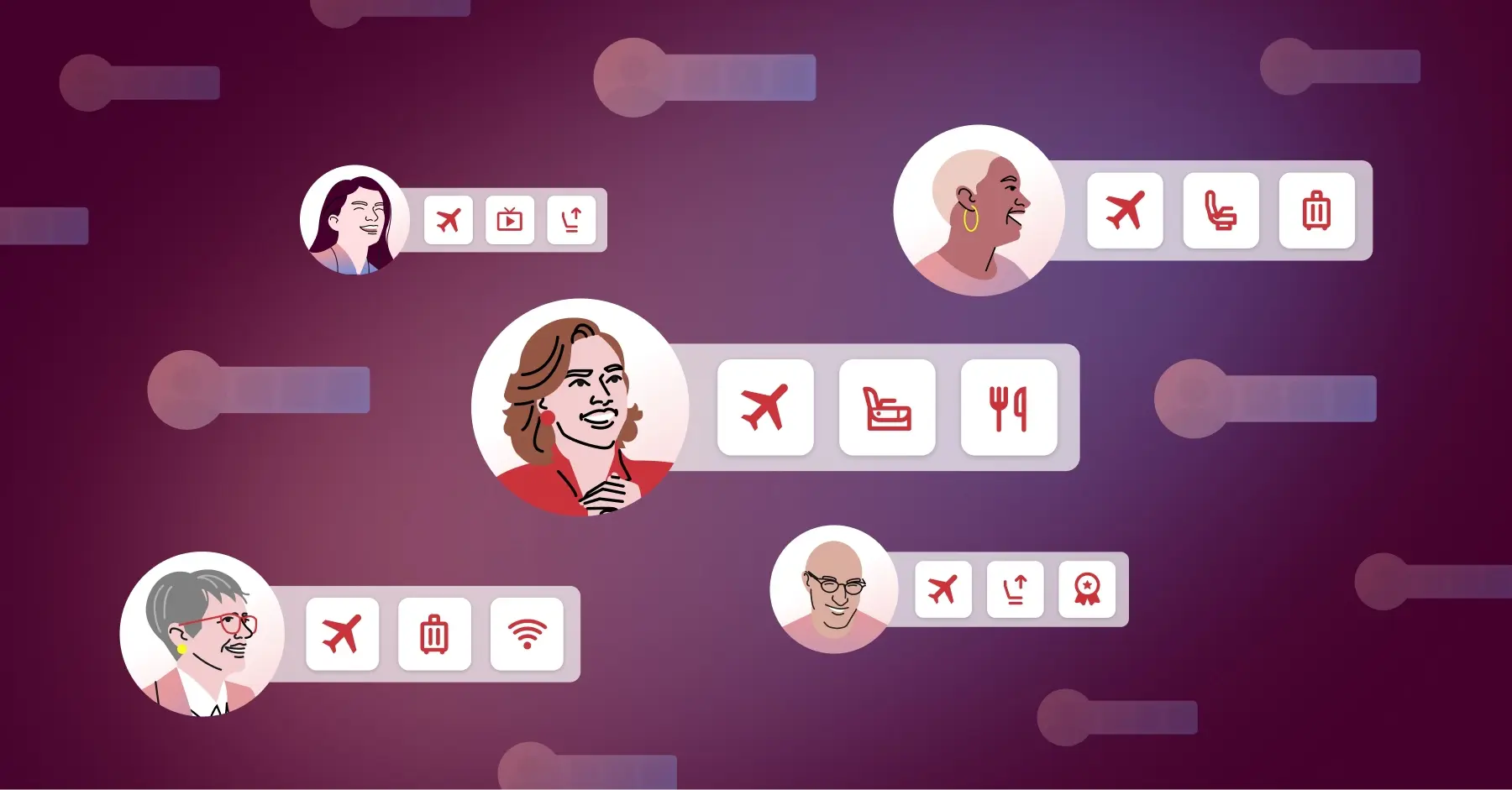
In the new world of Offers and Orders, an offer is an airline fare created in real time that includes a name, a bundle of features (i.e. cabin class, meals, bags, lounge access), fare rules, schedule, origin and destination, and a price. A virtually unlimited number of offers can be tailored to meet the needs of individual travelers and corporate travel programs.
Think about the experience of shopping on Amazon, where curated products are shown based on your browsing history, purchase patterns, and search parameters. Airlines are now building the same capability into their systems.
When you search for a flight, an airline will be able to create an offer specifically for you, considering factors like your loyalty status, past purchases, travel context (business versus leisure), and your preferred payment methods. Key characteristics of modern offers include:
- Real-time creation by the airline, not a third-party system with static fares that are filed.
- Bundled products that combine flights with ancillaries.
- Rich content with images, videos, and detailed descriptions.
- Personalization based on customer data and shopping context.
Understanding orders: your single source of truth
Going back to our restaurant analogy, when a waiter takes your order, they typically write down your request and deliver it to the kitchen for fulfillment. If you order a drink, a separate request is delivered to the bar.
The same basic concept applies with airlines, where the vast majority of orders today are managed through a text-based data file called a Passenger Name Record (PNR). Purchases of seats and other ancillaries are managed through a separate text-based data file called an Electronic Miscellaneous Document (EMD). Lastly, a third data file called an e-ticket conveys a confirmation of the booking to the passenger.
With Offers and Orders, an order is one unified record that replaces the fragmented system of PNRs, e-tickets, and EMDs. It’s the airline industry’s version of an Amazon order confirmation, and it tracks everything related to the purchase in one place, including product selection, payment details, and passenger information.
This single record lives in the airline’s system as the master source of truth. It contains all passenger information, every service purchased, payment details, and delivery status. Throughout all parts of a journey—from booking to boarding and beyond—the order updates in real-time, creating a seamless experience across touchpoints.
New Offer / Order systems will fundamentally change how airlines manage their customer relationships. Instead of reconciling information across multiple disconnected systems, everything will flow from one authoritative record. Whether your flight gets delayed and the airline rebooks you, or you add a bag at the airport, or you request a refund—all these actions update a single order, and those changes will propagate automatically to relevant systems.
Key characteristics of orders include:
- A master record owned by the airline.
- A single record number for everything purchased.
- Real-time updates throughout the journey.
- Unified payment and settlement information.
- Comprehensive service delivery tracking.
Where NDC fits in
Two IATA standards work together to enable Offers and Orders: NDC and ONE Order.
NDC (New Distribution Capability) currently handles the creation and distribution of offers. It’s the data exchange standard that connects airlines with sellers, enabling rich product content, dynamic pricing, and personalized offers to flow through any distribution channel. NDC ensures that travel agents can access the same content and capabilities that airlines offer on their own websites. NDC will be replaced as airlines move to full Offer Order systems and old PARS systems are replaced.
ONE Order handles the management and fulfillment of orders. It defines how airlines create, store, and manage the single customer record, replacing the fragmented system of PNRs, e-tickets, and EMDs. ONE Order provides data exchange standards for distribution partners, revenue accounting, and settlement, enabling the entire travel ecosystem to work from one source of truth.
Together, these standards enable true omnichannel retailing where a consistent, modern shopping experience is available via an airlines website, through a travel agent, or via a corporate booking tool.
Why the industry needs this change
The current airline distribution system was designed in an era of paper tickets, limited automation, and static product choice; ie. F, J, and Y cabin class codes. Travelers today expect personalization, transparency, and seamless experiences across channels. Airlines are offering more tailored and detailed cabin configurations. Travelers want to see exactly what they’re buying with rich product descriptions and images. They expect easy changes and refunds. They want one trip confirmation record that tracks everything.
Airlines can’t meet these expectations with traditional systems, which require pushing a static file to an intermediary to publish a current set of fares. The constraint of 26 fare options has significantly limited pricing flexibility. In addition, having multiple disconnected records has made servicing complex. Consider how changing a flight may require updating a PNR, reissuing an e-ticket, and handling a change to EMDs separately.
Airlines have felt tremendous pressure to implement a new generation of technology to bridge this gap.
What this means for your organization
The shift to Offers and Orders has different implications depending on your role in the travel ecosystem. We’re seeing these patterns as the industry transforms in discussions with our customers and partners.
Spotnana’s Travel-as-a-Service platform has been built from the ground up to support Offers and Orders, and we are actively working to support a smooth transition to this new world for airlines, travel management companies, and technology companies.
Corporate travel managers should expect much greater parity between what an airline offers on their website and what they can purchase through their TMC and booking tool. This means your travelers get more options while staying within your booking tools and policy frameworks.
Duty of care improves because you will have real-time visibility into traveler orders, making it easier to locate and assist employees during disruptions. Reporting becomes more comprehensive as all purchase and consumption data flows from unified sources rather than fragmented records. Policy management simplifies when you can see and control the full range of airline products, not just base fares.
Travel management companies gain competitive advantages that make it simpler to serve customers and provide access to content that previously drove travelers to book directly with airlines. Servicing becomes dramatically simpler—no more reconciling PNRs, e-tickets, and EMDs across different systems. You can advise customers more effectively with complete product information, transparent pricing, and the ability to compare true apples-to-apples offers.
Settlement processes also become faster and more accurate with automated reconciliation. Your technology investments in modern platforms that support Offers and Orders will pay dividends as more airlines complete their transition.
The road ahead
The transformation to Offers and Orders represents the airline industry’s evolution to customer-centric retailing. The first systems supporting Offers and Orders have already been deployed. Major airlines are leading the way, and mainstream adoption is expected by 2030.
We’re seeing momentum build across the travel ecosystem as more airlines launch capabilities. Whether you manage a corporate travel program or operate a TMC, it’s important to start building plans for how you will support this transition.
Written by

-
 What is content fragmentation in travel?Content fragmentation has become one of the defining challenges in corporate travel today. In the early days of travel management companies (TMCs), a travel manager could be confident that their TMC had access to...

-
 How to eliminate “I found it cheaper somewhere else”Every travel manager has heard the dreaded phrase: "I found it cheaper somewhere else." It's the most common complaint in corporate travel. Better pricing outside an online booking tool (OBT) is now the top...